

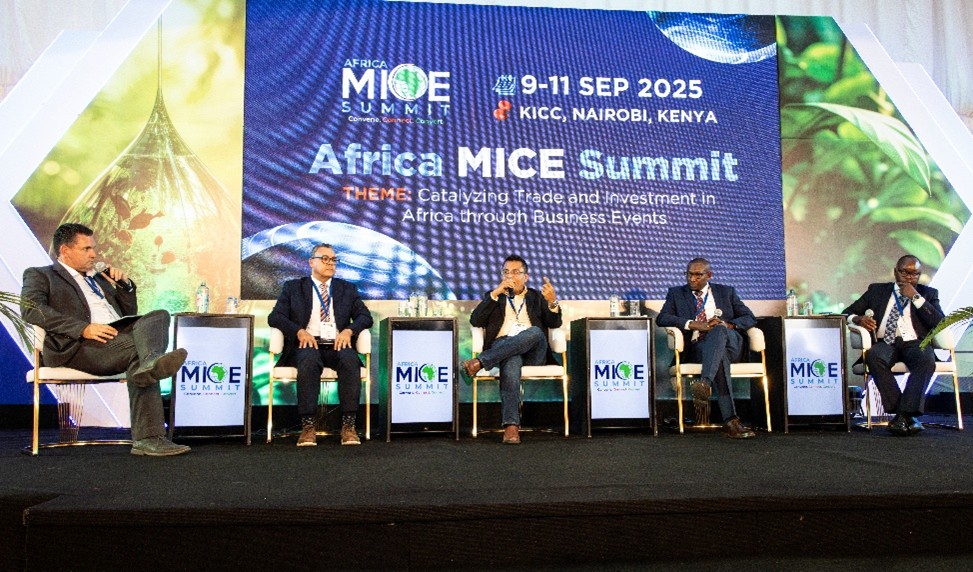
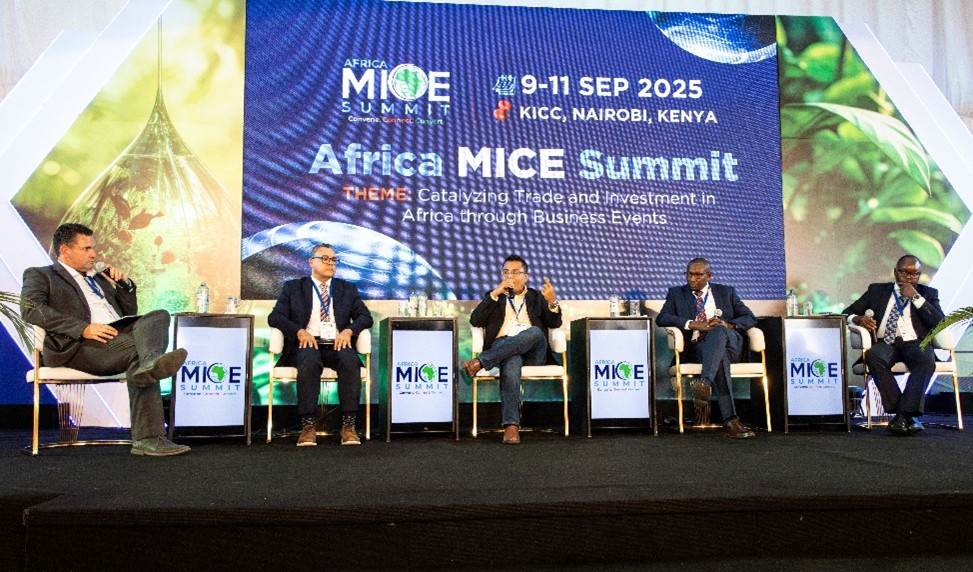
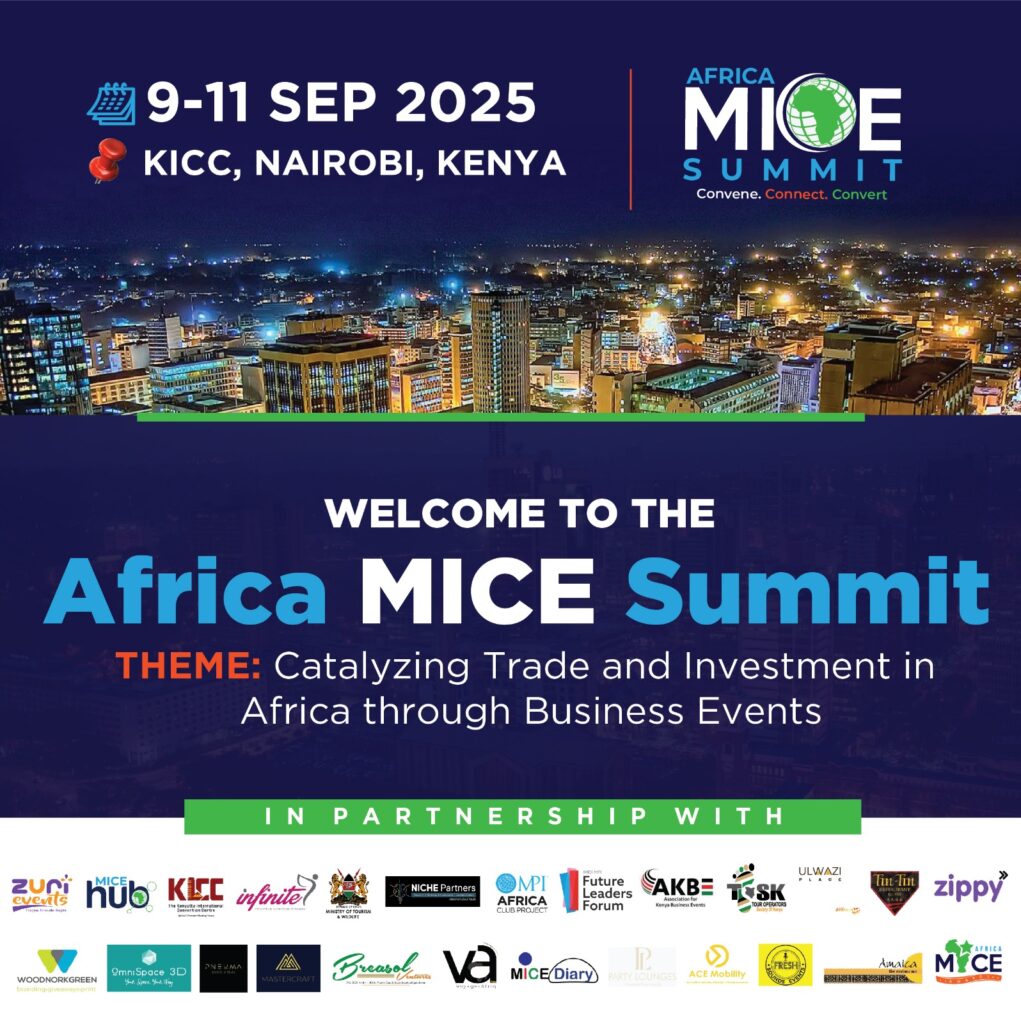
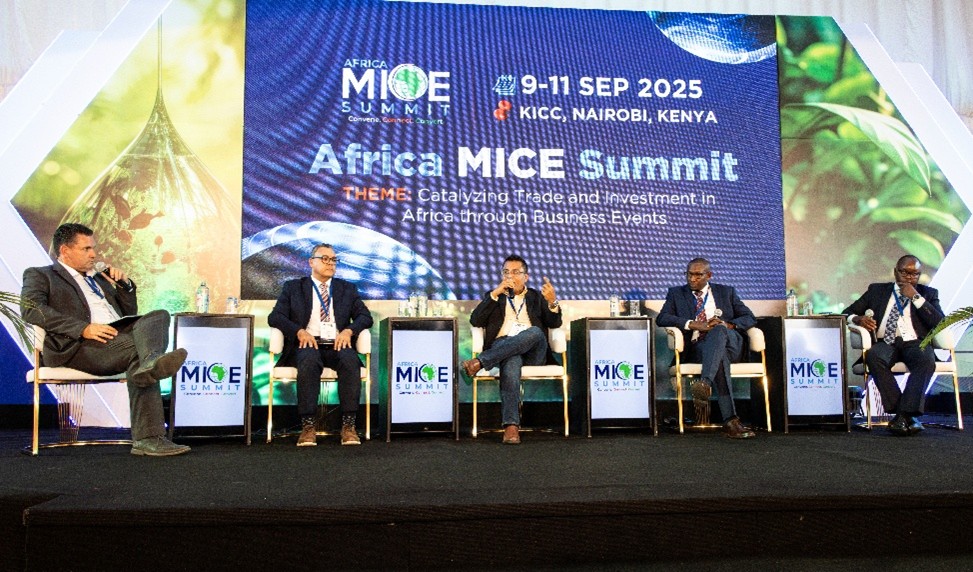
The three-day Africa MICE Summit 2025 opened in Nairobi, convening industry leaders, policymakers and investors under the theme “Catalysing Trade & Investment Through Business Events.” The event, held from 9-11 September at Kenyatta International Convention Centre (KICC), marks a concerted push to position the meetings, incentives, conferences and exhibitions (MICE) sector as a strategic engine for economic growth across Africa.
Summit Objectives & Context
Organisers emphasised that the MICE sector offers a meaningful path to:
- Strengthen trade and investment links by bringing together business-events professionals, investors and destination executives from across the continent.
- Raise the profile of African cities as global destinations for conferences, exhibitions and incentive travel.
- Promote innovation, sustainability and talent development in the business-events ecosystem, with panels focused on green venues, digital solutions and capacity building.
Key Highlights
- The summit opened with keynote remarks from high-level Kenyan government officials, including the Principal Secretary in the Ministry of Tourism & Wildlife, emphasising Kenya’s ambition to integrate business-events as part of its tourism and trade strategy.
- According to the summit organiser, Kezy Mukiri (CEO of Zuri Events), the event comes at an opportune moment as the African Continental Free Trade Area (AfCFTA) opens new trade corridors and business-events offer a realistic mechanism to activate intra-Africa commerce.
- Delegates represented more than 15 countries across Africa, the Middle East, Europe and Asia, signalling the growing interest in Africa’s MICE potential beyond leisure tourism.
- The programme featured investor-matchmaking sessions, destination pavilions, technology showcases and a gala banquet recognising excellence in Africa’s events industry.
Why MICE Matters for Africa
Business-events tourism is increasingly seen as a higher-yield, more stable segment compared to traditional leisure tourism:
- Delegates attending conferences and exhibitions typically spend more per visit and extend engagements into other sectors (hospitality, transport, entertainment).
- Business-events can fill “shoulder” periods in tourism calendars, reducing seasonal peaks and troughs.
- Hosting major international events raises the profile of destinations, builds event-organising capacity, and catalyses complementary infrastructure (hotels, venues, logistics, connectivity).
For cities and countries across Africa, seizing this segment offers a strategic way to diversify tourism offerings, stimulate investment and embed deeper linkages between the events industry and other sectors.
Challenges & Opportunities
While the momentum is building, several observations emerged at the summit:
- Infrastructure & connectivity gaps: Some African destinations still lack world-class convention centres, integrated venues and robust connectivity to attract major international events.
- Data and benchmarking: Reliable data on the business-events market in Africa remains limited, affecting investment decisions and destination planning.
- Professional capacity and branding: Developing skilled event-management talent, consistent service standards and destination branding are critical to competing globally.
- Policy and incentives: Governments and industry stakeholders emphasised the need for clear policies, public-private partnerships and investment-ready pipelines to unlock the full potential of the MICE sector.
What to Watch
- The number and scale of large- international business events secured by African destinations in the next 12–24 months.
- Investment deals and public-private partnerships announced for new or upgraded convention and exhibition infrastructure across Africa.
- How destinations integrate MICE with leisure tourism assets (safari, culture, beach) to offer unique value propositions.
- Developments in sustainable and technologically enabled event venues (green meetings, hybrid-event platforms, digital engagement).
- Destination competitiveness factors such as visa facilitation, air connectivity, accommodation capacity, service quality and logistics.
The Africa MICE Summit 2025 in Nairobi showcased a clear shift: business events are no longer a niche add-on to tourism, they are now part of the growth strategy for African economies seeking trade, investment and diversification. With the right infrastructure, policies and partnerships, the MICE sector may well become one of the missing links driving Africa’s next phase of economic integration and tourism transformation.